The shoe, the burn and the cut card
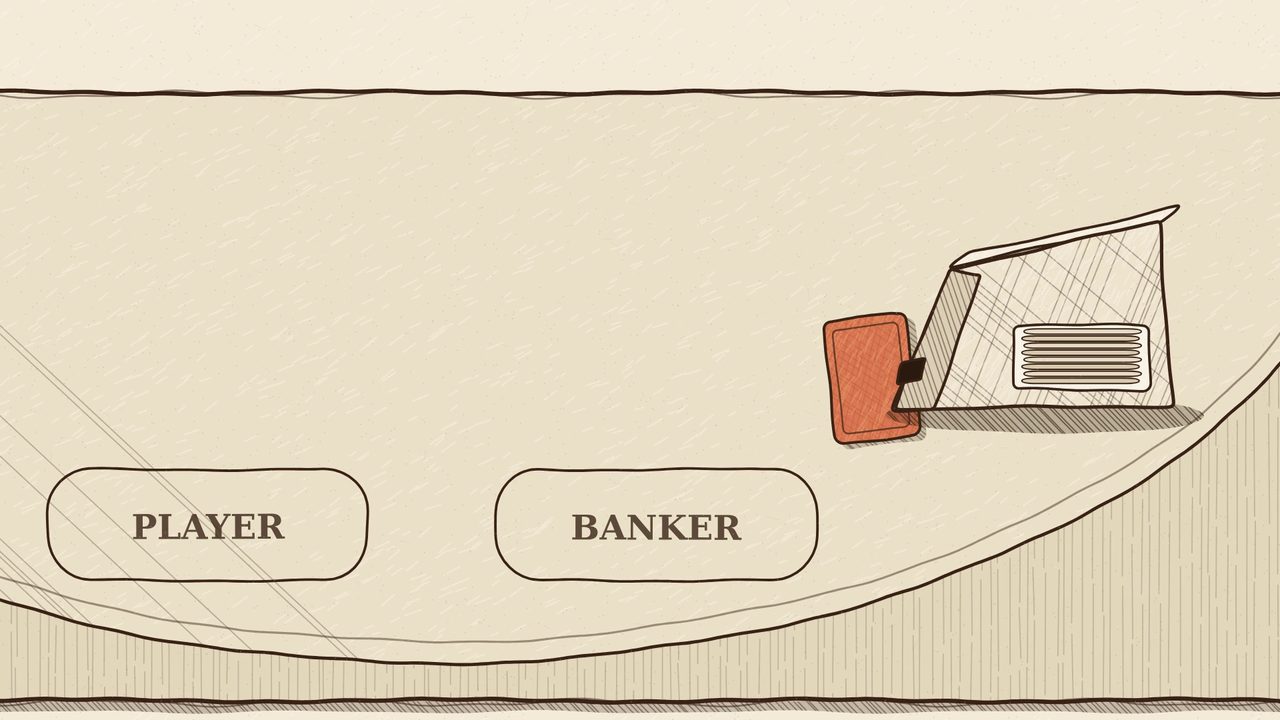
The dealer sits behind a curved table beside a plastic box called a shoe, which holds eight standard decks of playing cards. The cards are shuffled before they are loaded into the shoe.
Before a new shoe begins, the dealer burns cards. The first card is turned face up and that many cards are burned face down, with tens and face cards counting as ten. If the first card is a seven, seven cards go into the discard tray. The burn is an old habit of the game, there to keep the order of the top cards unknown.
Further down the shoe sits the cut card. When it comes out, the hand in play is finished and one more hand is dealt, then the shoe is changed and the burn starts again. Step through a whole shoe, from the shuffle to the last hand.
The betting window and the deal
Once the shoe is ready, a digital timer appears on your screen. You have a short window to select your chip value and click on the betting areas labelled Player, Banker or Tie. When the timer hits zero, the betting interface locks.
The dealer then draws four cards face up. The first and third cards go to the Player position. The second and fourth cards go to the Banker position. Cards two to nine are worth their face value. Tens and face cards are worth zero. Aces are worth one. If a total reaches ten or higher, the first digit is dropped, so an eight and a seven make fifteen, which counts as five.
If either hand has eight or nine from its first two cards, this is called a natural. The round ends immediately and the higher total wins. If neither hand has a natural, the dealer follows a fixed set of drawing rules to decide whether a third card is dealt.
When a third card is drawn
The Player hand always acts first. On a total of zero to five, the dealer draws a third card for Player. On six or seven, Player stands.
The rules for the Banker hand are more involved, but you never need to memorise them because the dealer carries them out. If Player stands on two cards, Banker follows the same rule, drawing on zero to five and standing on six or seven. If Player draws a third card, the Banker action depends on the value of that card.
On two or less, Banker always draws. On three, Banker draws unless the Player's third card was an eight. On four, Banker draws if the Player's third card was between two and seven. On five, Banker draws if it was between four and seven. On six, Banker draws only if it was a six or a seven. On seven, Banker always stands. The full chart is on the baccarat rules page.
What each bet pays
If you bet on Player and it wins, you are paid one to one. A ten pound bet returns ten pounds in profit. The house edge on the Player bet is 1.24 per cent, meaning it costs you £1.24 for every £100 staked over the long term.
If you bet on Banker and it wins, you are paid nineteen to twenty, because the house takes a five per cent commission on winning Banker bets. On a live table the deduction is automatic: a £20 Banker win pays £19 and the software settles it with the round. The commission is the price you pay for backing the hand that acts last. Even with the five per cent deduction, the Banker bet has a house edge of just 1.06 per cent, which is £1.06 per £100. It is the cheapest bet at the table.
If you bet on Tie and the hands finish level, you are paid eight to one, and your bets on Banker and Player are returned as a push. The house edge on the Tie bet is 14.36 per cent. It costs you £14.36 per £100 staked.